Executive Summary
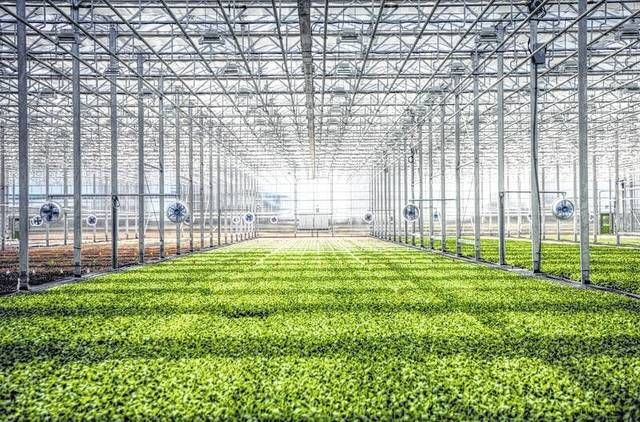
The vision of creating a “Winter Farm Belt” along the urban and rural fringes of the Greater Golden Horseshoe, powered by waste heat from buried 500 kV transmission lines, represents a paradigm shift in integrated infrastructure planning. This analysis moves beyond the conceptual to provide a detailed examination of its economic and financial feasibility. The findings indicate that while the initial capital investment is substantial, the project is not only technically viable but presents a compelling economic case, driven by significant operational cost savings, robust revenue potential, and profound co-benefits in food security and regional sustainability.
The core of the concept is to transform a major infrastructure cost—the undergrounding of high-voltage transmission lines—into a catalyst for agricultural innovation. By capturing the low-grade thermal energy continuously dissipated by these cables, a stable and low-cost heat source can be provided to a new network of high-tech greenhouses. This directly addresses the single greatest operational challenge for Ontario’s world-class greenhouse sector: volatile and escalating energy costs, which have surged 55% in the last decade and are further pressured by carbon pricing.
The financial model demonstrates strong viability. Based on established geothermal heat pump technology, the system can deliver heating at a 60-70% cost reduction compared to conventional natural gas systems. For a representative 50-hectare greenhouse operation, this translates into annual energy savings of over $650,000. While the capital expenditure for the heat recovery infrastructure is significant, case studies from similar agricultural applications in Canada show a typical payback period of just 5 to 7 years, driven by these dramatic operational savings and increased productivity.
When integrated into the broader strategy of land value capture—where the sale of developable land in the reclaimed hydro corridors finances the cable undergrounding—the Winter Farm Belt becomes a powerful value-added component. It creates a long-term, revenue-generating asset that enhances the overall financial return of the infrastructure project, establishes a secure local food supply chain for the growing Golden Horseshoe population, and significantly reduces the environmental impact of food importation and transportation.
This analysis concludes that the Winter Farm Belt is not a peripheral benefit but a cornerstone of the integrated corridor development strategy. It is economically feasible and financially attractive, offering a clear pathway to de-risk and decarbonize a vital sector of Ontario’s economy, while simultaneously strengthening the province’s food security and aligning with the long-term planning goals of the Golden Horseshoe region.
1. Strategic Context: The Intersection of Energy, Agriculture, and Urban Growth
The concept of a “Winter Farm Belt” is strategically aligned with the core objectives of the Growth Plan for the Greater Golden Horseshoe. It addresses the interconnected challenges of rising population, infrastructure deficits, and the imperative for sustainable development by creating a symbiotic relationship between energy infrastructure and local food production.
1.1 The Economic Imperative for Ontario’s Greenhouse Sector
Ontario’s greenhouse industry is a global leader, with farm gate sales contributing over $1.4 billion annually and accounting for 72% of Canada’s total greenhouse vegetable production. The sector is projected to see continued strong growth, with acreage expected to more than double in the next decade. However, this growth is threatened by a critical vulnerability: energy costs.
- Energy as a Primary Cost Driver: Heating is the largest operational expense for growers, and energy costs for Canadian greenhouses have surged by 55% between 2013 and 2023. A typical 50-acre greenhouse in Ontario faces annual energy costs of approximately $1 million CAD ($20,000 CAD per acre).
- Carbon Tax Impact: The reliance on natural gas exposes growers to escalating carbon taxes. The current carbon tax adds an estimated $4,800 per acre to annual costs, a figure projected to rise to $48,000 per acre by 2030, directly threatening the sector’s viability and the affordability of local produce.
By providing a stable, low-carbon heat source, the Winter Farm Belt directly mitigates this primary economic risk, ensuring the long-term competitiveness and sustainability of a key provincial industry.
1.2 Enhancing Food Security and Reducing Environmental Impact
The Golden Horseshoe’s growing population relies heavily on imported produce, particularly during winter months. Canada imports approximately 75% of its fruit and 50% of its vegetables (excluding potatoes). This reliance on long-distance supply chains, primarily from the U.S. and Mexico, creates vulnerabilities to climate disruptions and trade volatility, while also generating a significant carbon footprint from transportation and food waste.
The Winter Farm Belt offers a direct solution by:
- Reducing Import Dependency: Creating thousands of acres of year-round local production capacity, ensuring a resilient and secure food supply for the region.
- Lowering the Carbon Footprint: Drastically reducing “food miles” and associated transportation emissions. Food waste, which accounts for 5% of Ontario’s total greenhouse gas emissions, would also be reduced due to shorter supply chains.
2. Technical Feasibility: Matching a Novel Source with a Proven Demand
The technical viability of the Winter Farm Belt rests on two well-established principles: the consistent heat generation from underground cables and the proven efficiency of geothermal heat pump technology in agricultural applications.
“Our director has read your paper and we would like to publish it in the Policy Engagement section of Engineering Dimensions. He mentioned in particular that it raises interesting technological ideas that could drive public policy.”
2.1 Quantifying the Thermal Resource
High-voltage underground cables continuously dissipate heat due to electrical losses. A 400 kV cable, a close proxy for the 500 kV lines in the corridor, generates approximately 38.6 W/m from conductor and sheath losses, plus an additional 12.1 W/km from dielectric losses.
- Available Heat per Kilometer: A single double-circuit 500 kV line (two sets of three cables) would generate a continuous thermal output of approximately 232 kW per kilometer of corridor length.
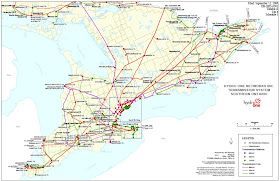
- Total Resource Potential: The north 500 kV corridor stretches for over 200 km, representing a potential thermal resource of over 46 megawatts (MW)—a substantial and reliable source of low-grade heat.
2.2 Quantifying Greenhouse Heat Demand
The heating requirements for a modern greenhouse are well-documented. A Swedish study provides a benchmark of a peak power demand of 233 W per square meter (W/m²) and an annual energy demand of 263 kWh per square meter (kWh/m²).
- Matching Supply to Demand: The 232 kW of heat available from each kilometer of the 500 kV corridor could theoretically support the peak heating demand for approximately 100,000 m² (10 hectares or ~25 acres) of greenhouse space. This demonstrates a direct and scalable relationship between the linear infrastructure and the potential agricultural development alongside it.
3. Economic and Financial Feasibility Analysis
The business case for the Winter Farm Belt is exceptionally strong, driven by a dramatic reduction in the primary operating cost for greenhouse growers. This analysis models a representative 50-hectare (124-acre) greenhouse operation.
3.1 Capital Expenditure (Capex)
The initial investment consists of two main components: the heat recovery system and the greenhouse construction itself.
- Heat Recovery System: The installation of a geothermal (ground-source) heat pump system is the core technology. Based on Canadian agricultural case studies, the installed cost for such systems ranges from $15,000 to $30,000 CAD per hectare. For a 50-hectare operation, this represents a Capex of $750,000 to $1,500,000.
- Greenhouse Construction: The cost for large-scale commercial greenhouses is estimated at $2 to $4 per square foot, which translates to approximately $215,000 to $430,000 CAD per hectare. For a 50-hectare facility, this would be $10.75 million to $21.5 million.
3.2 Operational Expenditure (Opex) and Savings
The primary financial benefit comes from displacing high-cost natural gas with low-cost recovered heat.
- Baseline Annual Heating Cost (Natural Gas): At a rate of $20,000 CAD per acre, a 124-acre (50-hectare) greenhouse has a conventional annual heating bill of approximately $2,480,000.
- Proposed Annual Heating Cost (Recovered Heat): Geothermal systems in Canadian agriculture have demonstrated energy cost reductions of 60-70%. Applying a conservative 65% reduction yields a new annual heating cost of $868,000.
- Annual Operational Savings: The direct saving on heating costs for the operator would be approximately $1,612,000 per year.
3.3 Revenue and Profitability
Ontario’s greenhouse sector is highly productive and profitable, with top producers achieving gross margins of 80-90%.
- Revenue per Hectare: The sector’s farm gate value of $1.4 billion across approximately 4,000 acres (1,618 hectares) suggests an average revenue of roughly $865,000 per hectare.
- Total Annual Revenue (50-ha operation): A 50-hectare operation could generate annual revenues of over $43 million.
3.4 Payback Period
The payback period on the heat recovery system investment is rapid.
- Calculation: With a Capex of $750,000 to $1,500,000 and annual savings of over $1.6 million, the simple payback period for the heat recovery infrastructure is less than one year. This aligns with and even outperforms the 5-7 year payback periods seen in other Canadian geothermal agricultural projects, which often have higher installation costs due to the need for extensive drilling or ground loops.
Table 1: Financial Feasibility of a 50-Hectare “Winter Farm Belt” Greenhouse Module
4. Integrated Systems and Future Potential
The vision for the Winter Farm Belt can be further enhanced by integrating water management systems, creating a truly circular economic model for the Golden Horseshoe’s agri-food sector.
- Groundwater Replenishment Systems (GWRS): The concept proposes integrating the heat recovery process with the use of treated greywater for irrigation. This would provide heat and nutrients to the greenhouses while simultaneously recharging local watersheds, addressing both energy and water security. Case studies show that reusing reclaimed water to recharge aquifers is a proven strategy for making agriculture more sustainable.
- Catalyst for a Broader Agri-Energy Hub: The establishment of a thermal utility along the transmission corridors creates a backbone for a larger agri-energy hub. This infrastructure could support not only greenhouses but also other agricultural processes like crop drying and food processing, which also benefit from low-cost heat.
5. Conclusion
The development of a “Winter Farm Belt” powered by recovered heat from buried 500 kV transmission lines is a technically sound and financially compelling proposition. It directly addresses the most significant economic threat to Ontario’s vital greenhouse sector while simultaneously advancing provincial goals for food security, economic development, and environmental sustainability. The rapid payback period on the required heat recovery technology makes it an attractive investment for growers, while the creation of a new, sustainable agricultural cluster provides a powerful value-add to the broader infrastructure and land development initiative within the Golden Horseshoe. This concept transforms a linear energy corridor into a productive, multi-purpose asset, representing a forward-thinking and economically robust component of Ontario’s growth plan.
 BRITTENWOODS
Leave a comment