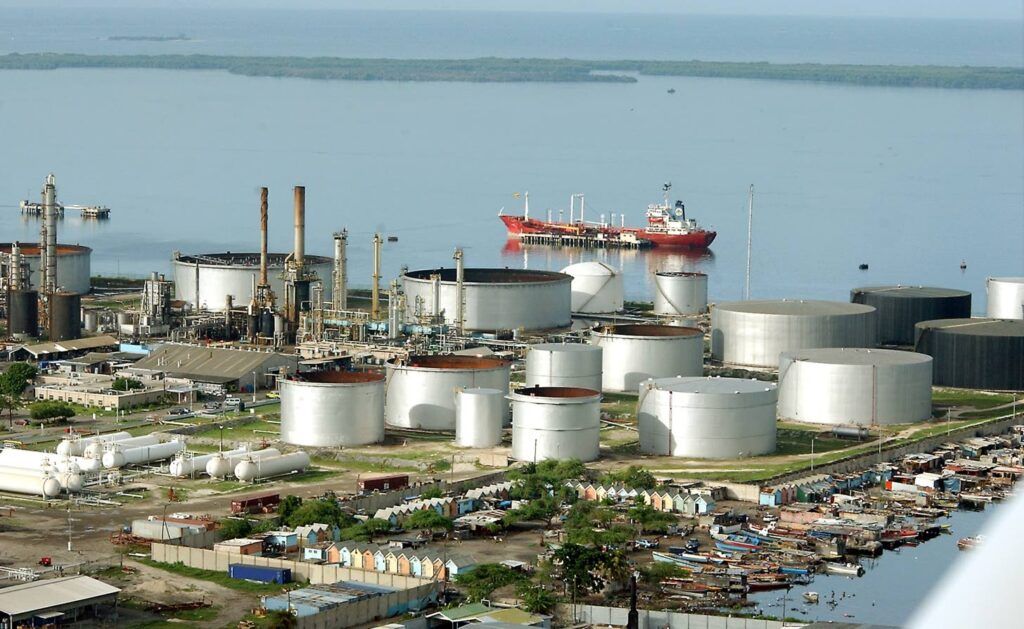
For too long, Petrojam Limited has existed in Jamaica’s public consciousness as a symbol of fiscal disappointment — a national asset that reliably produces headlines about losses, audit findings, and governance failures. The 2023/24 fiscal year was no different: US$24.27 million in net losses, cash reserves covering barely 17 cents of every dollar owed, and a two-year cumulative deficit of J$7.6 billion. Critics are right to demand accountability.
But buried beneath the audit reports and the red ink is a genuinely compelling industrial opportunity — one that could simultaneously rescue the refinery’s balance sheet and shield Jamaican farmers from the whims of global commodity markets. The answer, improbably, lies in sulfur.
The logic is straightforward.
The planned Refinery Upgrade Project would equip Petrojam with a Sulfur Recovery Unit capable of capturing elemental sulfur that is currently vented, flared, or lost as an environmental liability. Processing 50,000 barrels per day of high-sulfur crude, the refinery could recover up to 90 metric tons of elemental sulfur daily. Through a well-established chemical process, that sulfur, combined with ammonia, yields ammonium sulfate — a dual-nutrient fertilizer providing nitrogen and sulfur, and one particularly well-suited to Jamaica’s soils and primary crops.
At full production, Petrojam could generate between 113,000 and 135,000 metric tons of ammonium sulfate annually — enough to saturate domestic demand and supply regional CARICOM partners with surplus. The projected gross revenue: US$33 million to US$54 million per year. That is, by itself, more than enough to erase the losses that have made Petrojam a political embarrassment.
Consider what this means for the farmer in Trelawny or St. Elizabeth.
A single bag of fertilizer already costs roughly $3,000, representing more than 22% of production costs for a standard yam plot. In 2021 and 2022, fertilizer prices across the Caribbean doubled, and farmers responded the only way they could — by planting less. Jamaica currently applies fertilizer at just 59.2 kilograms per hectare of arable land, less than 40% of the global average. The correlation between that statistic and our chronically underperforming agricultural yields is not coincidental.
Jamaica imports roughly 50% of its fertilizer raw materials, spending over US$12 million annually on a product we could, with the right investment, largely produce at home. Every dollar spent abroad on fertilizer is a dollar that widens our trade deficit, weakens the Jamaica dollar, and ultimately lands on the kitchen table as higher food prices. Local production would sever that chain.
Ammonium sulfate is also no afterthought for our signature crops. Sugarcane yields improve measurably with nitrogen-rich inputs. Blue Mountain coffee benefits from sulfur-activated enzyme production. Mangoes, papaya, and citrus show yield increases of 15% to 30% under rational fertilizer application. If we are serious about Vision 2030’s agricultural transformation and CARICOM’s “25 by 2025” food import reduction targets, then affordable, locally produced fertilizer is not optional — it is foundational.
Petrojam has already demonstrated it can do this.
The refinery’s HFO-to-asphalt project — conceived and executed in-house — tripled asphalt production capacity to 230,000 barrels annually. That project is not merely a commercial success; it is the technical precursor to sulfur recovery, and proof that Petrojam’s teams are capable of delivering complex industrial innovation without relying on expensive foreign consultants.
But honesty demands that we acknowledge the other Petrojam — the one the Auditor General documented. Between 2013 and 2018, the refinery lost over 600,000 barrels of oil to unaccountable inventory shrinkage. A single testing laboratory contract ballooned by 56%. A perimeter fence that should have cost $29 million ended up consuming $96 million. Dock repairs dragged on for five years and cost $2.9 billion. These are not bureaucratic footnotes; they are symptoms of an institution that has historically substituted reactive crisis management for disciplined governance.
If the Refinery Upgrade Project — estimated at US$1 billion — is allowed to proceed under the same institutional culture that produced those failures, the fertilizer windfall will never arrive. The NPV of Phase 1 alone exceeds US$134 million; losing that to mismanagement would be a national tragedy.
The prescription, then, is not simply industrial: it is institutional. A dedicated governance sub-committee, rigorous procurement protocols, and real-time audit oversight are not bureaucratic obstacles to progress — they are the conditions that make progress possible. The Auditor General’s recommendations must be treated as a to-do list, not a historical document.
Jamaica stands at a rare convergence.
A loss-making refinery holds the chemistry to reduce food insecurity. Industrial waste becomes agricultural input. Energy policy and food policy stop operating in silos and start reinforcing each other. The global ammonium sulfate market is growing at nearly 7% annually and is projected to reach US$7.7 billion by 2035; the export opportunity is real.
We are not short of analysis, reports, or national plans. What has historically been in short supply is the combination of political will and institutional discipline required to execute. Petrojam’s fertilizer story is not complicated. It is sulfur into food, waste into wealth, and a losing balance sheet into a national asset.
The question is whether those charged with stewarding this refinery have learned anything at all from the audits that have chronicled its decades of squandered potential.


Leave a Reply